Four Simple Changes
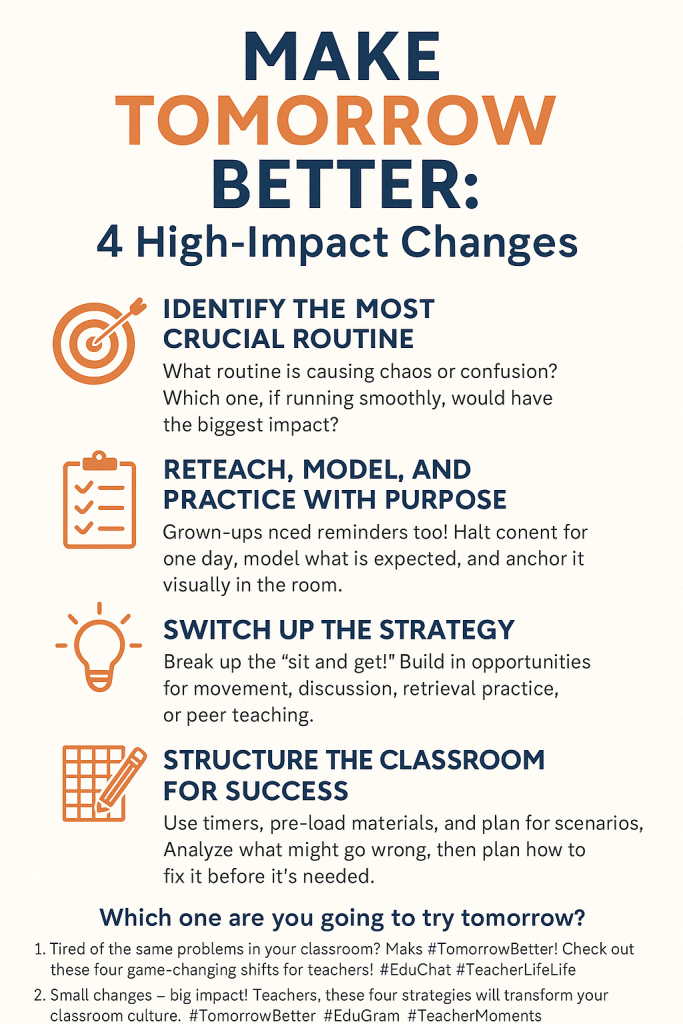
Over the past three years, I’ve had the privilege of partnering with phenomenal 6-8 grade teachers—observing, co-planning, and coaching through the ups and downs of everyday classroom life. One theme always rises to the top: how can we make tomorrow better for students and for ourselves?
Through hundreds of coaching conversations, I’ve narrowed it down to four impactful, teacher-tested shifts that spark transformation in any classroom. These strategies aren’t about doing more—they’re about doing what matters most, with intention.
1. Identify the Most Crucial Routine
Classroom routines are the backbone of effective instruction—and when one isn’t working, everything else feels off.

“The culture of your classroom is defined by the worst behavior you allow.” – Doug Lemov
Take five minutes to reflect:
- What routine (carpet time, centers, transitions, reading groups) is consistently causing chaos, lost time, or confusion?
- Which one, if running smoothly, would make the biggest difference in your day?
Once you identify it, commit to improving it—immediately.
2. Reteach, Model, and Practice with Purpose
Whether it’s week 2 or week 32, there is never a wrong time to reteach a routine. As Brian Mendler reminds us:
“Kids do well if they can. If they’re not doing well, it’s not because they don’t want to—it’s because they don’t know how.”
Push pause on academic content for one day and invest in long-term gains:
- Model what the routine looks like, sounds like, and feels like
- Let students generate the anchor chart with you—this gives them ownership and raises accountability
- Add visual reminders in the room and refer back to them daily
This isn’t lost time—it’s reclaimed minutes for the rest of the year.
3. Switch Up the Strategy
“If the bum is numb, so is the brain.”
Learning is not a sit-and-get experience. Active engagement isn’t a bonus—it’s the vehicle for learning.
Ask yourself:
- When was the last time students got to move, share, draw, build, or teach a peer?
- Do they know how they learn best? Have you asked?
Incorporate movement-based strategies, quick turn-and-talks, peer teaching, or even a gallery walk. Consider these engagement tools:
- EduProtocols (e.g., “Iron Chef” or “Sketch & Tell”)
- Retrieval Practice techniques
- Brain Breaks + Focused Re-entry tasks
Pair every lesson with one clear objective and end with this question:
“How will students show me they learned this?”
4. Structure the Classroom for Success
High-yield instruction thrives in intentional spaces. Every small structure you plan today is one fewer disruption you manage tomorrow.
“Students rise—or fall—to the level of your systems.” – Brian Tolentino

Try this:
- Use a timer (like Classroomscreen.com) to pace lessons intentionally—remember: attention span = age + 2 minutes!
- Pre-load materials: sticky notes, texts, anchor charts, manipulatives—whatever students will need to be successful
- Design seating and visibility intentionally, especially for whole group work
Proactive planning prevents reactive behavior management.
Ask:
- What could go wrong?
- What questions or misconceptions will students have?
- Where will I stop and check for understanding?
Make Just One Shift Tomorrow
You don’t need to change everything—just one thing. Choose the strategy that speaks to your current reality and start there. Whether it’s resetting a routine or redesigning your lesson with movement, your classroom will feel the difference immediately.
“You don’t need more time. You just need to decide.” – Dave Burgess
I’d love to hear how it goes! Which one are you going to try tomorrow?
Share your success, your tweaks, and your wins—I’m cheering you on.
 Bloom with Aubrey