As the school year winds down, it’s tempting to think the finish line signals a time to coast. But in reality, the final stretch is one of the most critical moments for student engagement, motivation, and connection. It’s when we either solidify the year’s gains—or risk letting them fade.
The good news? You don’t need a massive overhaul. You just need a few high-yield strategies and a little bit of intentionality. Let’s dive into some practical, research-backed ways to make these last weeks count, along with insights from some of education’s most trusted voices.
- Keep Expectations High—and Visible
“What you permit, you promote.” – Brian Mendler
It’s easy to relax your standards when the countdown begins. But students need boundaries more than ever when structure starts to fade. Consistent routines, visible behavior expectations, and clear consequences reduce anxiety and prevent springtime chaos. Mendler reminds us that consistency is compassion—especially for students who rely on structure for success.
🔹 Try this: Revisit your classroom norms with students. Make it a class discussion and have them reflect on what’s helped them thrive this year.
- Keep Participation Techniques Tight
“Technique trumps charisma.” – Doug Lemov
Doug Lemov, author of Teach Like a Champion, emphasizes that strong, intentional strategies outperform personality alone—especially when attention spans are short. High-engagement techniques like Cold Call, No Opt Out, and Everybody Writes aren’t just for the beginning of the year. They’re especially powerful now.
🔹 Try this: Use “Turn and Burn”—have students write a short response, turn to a partner, and share immediately. This combo of writing, movement, and discussion keeps the energy up.
- Add Purposeful Creativity
“Don’t just teach a lesson—create an experience.” – Dave Burgess, Teach Like a Pirate
By late spring, students have seen hundreds of lessons. Break the pattern. Use thematic days, role-play simulations, menus, or project-based tasks to bring relevance and novelty into the room. Burgess advocates for teaching in a way that’s unpredictable and unforgettable. Engagement doesn’t have to mean silliness—but it should mean curiosity and connection. When students have authentic opportunities to contribute, their engagement skyrockets. Use choice boards, book tastings, genius hour, or student-led discussions to allow space for reflection and exploration.
🔹 Try this: Create a “Real World Remix” week where students apply what they’ve learned in authentic ways—pitching solutions, designing campaigns, or teaching a mini-lesson to peers.- Try this: End the year with a “Pass the Torch” activity—students create advice and encouragement for next year’s learners.
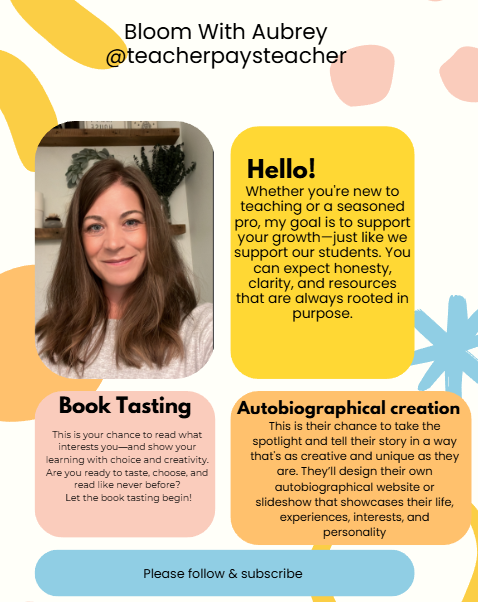
Try a Book Tasting with a Menu Board or a Autobiography Google Site
https://www.teacherspayteachers.com/store/bloom-with-aubrey



- Relationships Over Routines
“Connection isn’t just part of the work—it is the work.” – Brian Tolentino
Brian Tolentino reminds us that the best instructional strategies are only as strong as the relationships they’re built on. Use these weeks to intentionally restore, reconnect, and reaffirm relationships with students. Ask about their goals. Laugh with them. Tell them what you’ve noticed they’ve improved on.
🔹 Try this: Set a goal to write or say something specific and positive to five different students per day. Be intentional. Name their growth.
The final weeks are not a time to “wind down”—they’re a chance to leave a lasting impression. Lean into structure, spark curiosity, strengthen relationships, and let your students finish strong—because they deserve your best until the very end.
“The job of a teacher is not to cover the curriculum. It is to uncover the potential.” – Dave Burgess
 Bloom with Aubrey
Leave a comment